
Fourteen devices.
The processors that ship with Audizer, what each is for, and every control with its range.
Parametric EQ
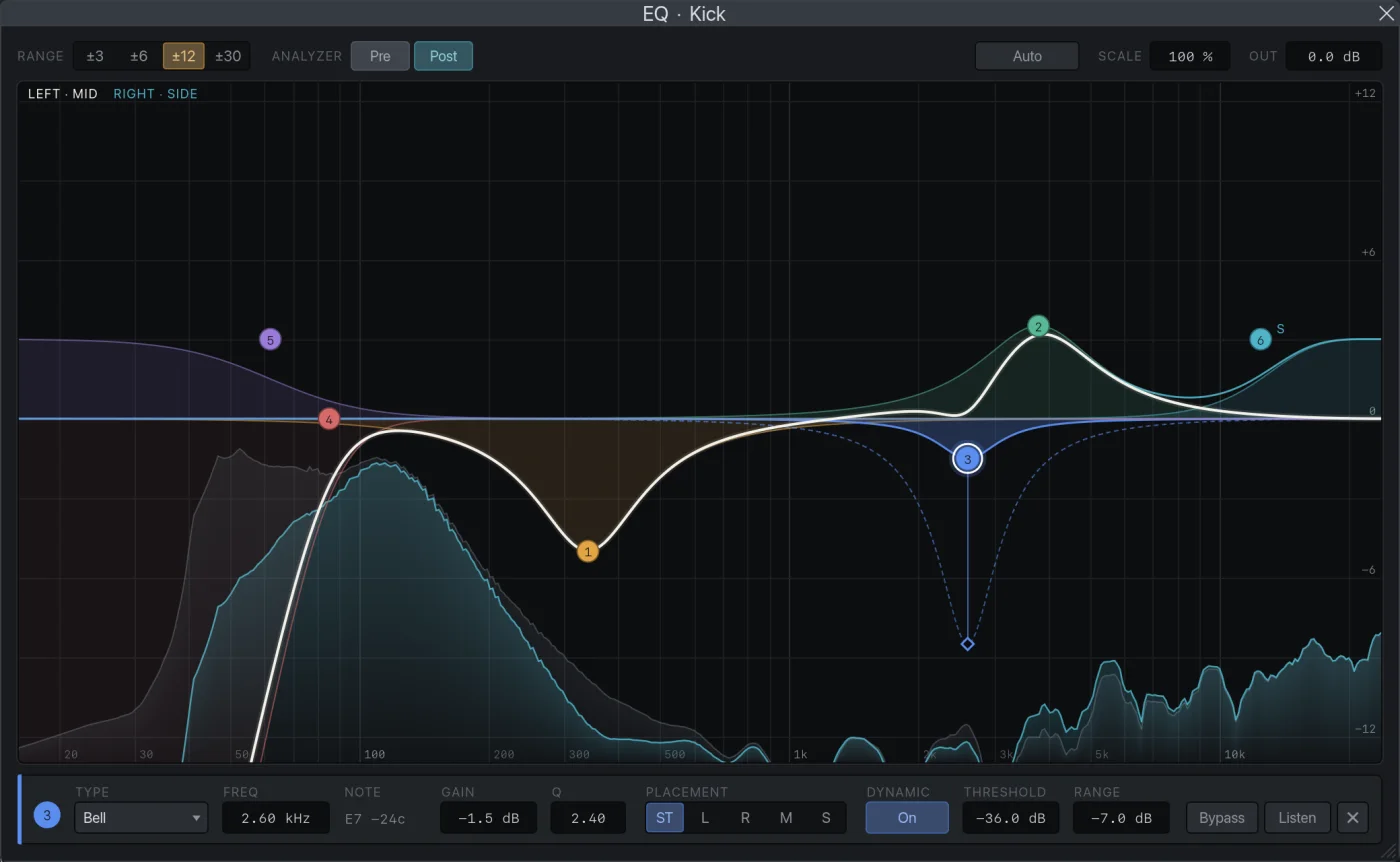
The EQ you'll reach for on every track. Double-click the display to add a band and drag it where you want it. Each band can be a bell, shelf, cut, notch, band-pass or tilt, and bells, shelves and tilts can be made dynamic so they only work when the signal crosses a threshold. A live spectrum sits behind the curve.
- Bands
- Up to 24. Bell, low and high shelf, low and high cut, notch, band-pass, tilt
- Cut slopes
- 6 to 96 dB per octave
- Placement
- Stereo, left, right, mid or side, per band
- Dynamic
- Threshold and range on bells, shelves and tilts, cutting or boosting
- Display
- Spectrum before and after, ±3 to ±30 dB range, opens in its own large window
- Output
- Trim, auto gain, and a scale control for the whole curve
Compressor
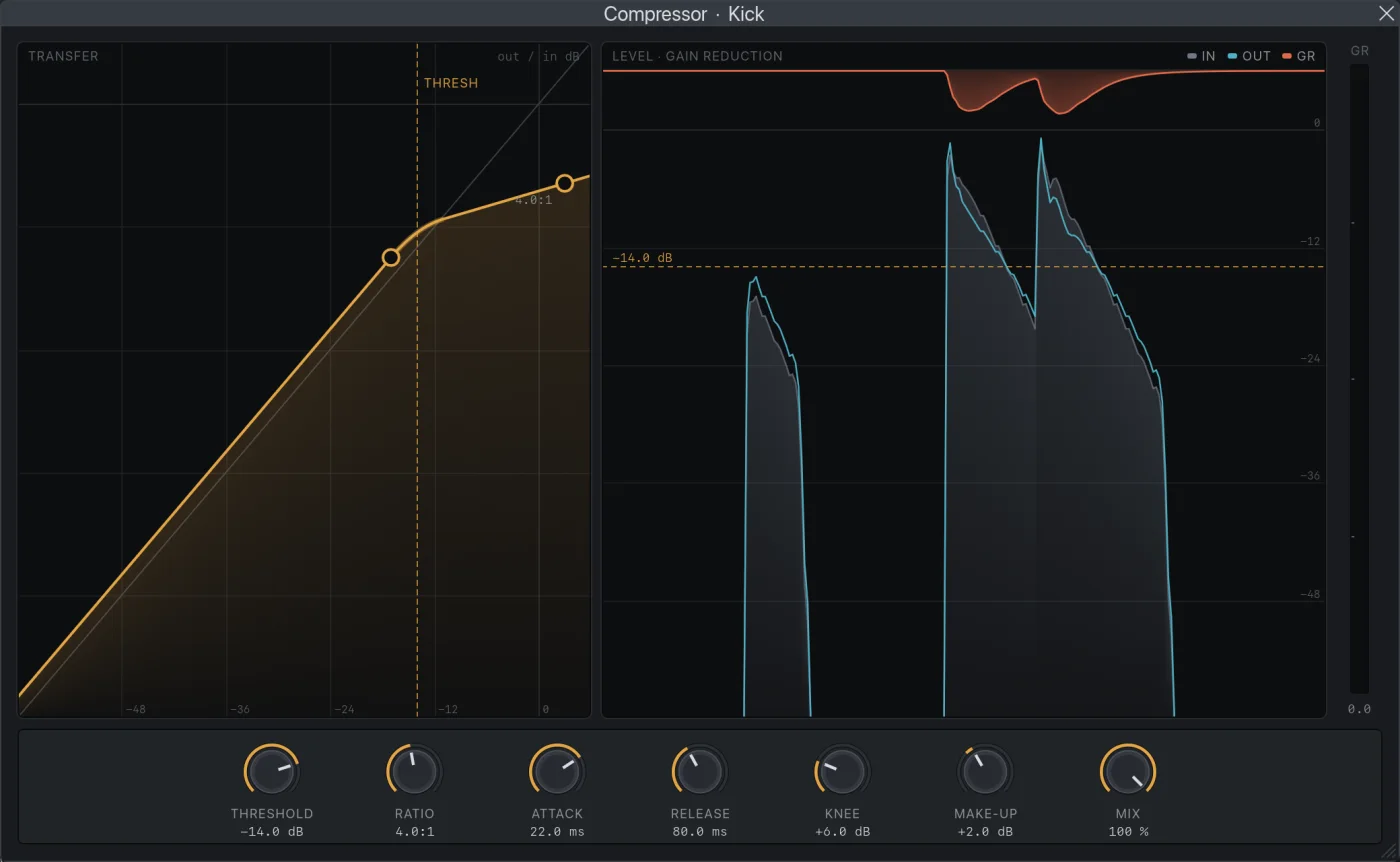
A straightforward compressor with real units on every control. The display shows the transfer curve, with threshold and ratio you can drag, next to a running history of level and gain reduction, so you can see how hard it is working and when it lets go.
- Threshold
- −60 to 0 dB
- Ratio
- 1:1 to 20:1
- Attack
- 0.1 to 200 ms
- Release
- 10 ms to 2 s
- Knee
- 0 to 24 dB
- Make-up
- −12 to +24 dB
- Mix
- Dry to wet, for parallel compression
Multiband compressor
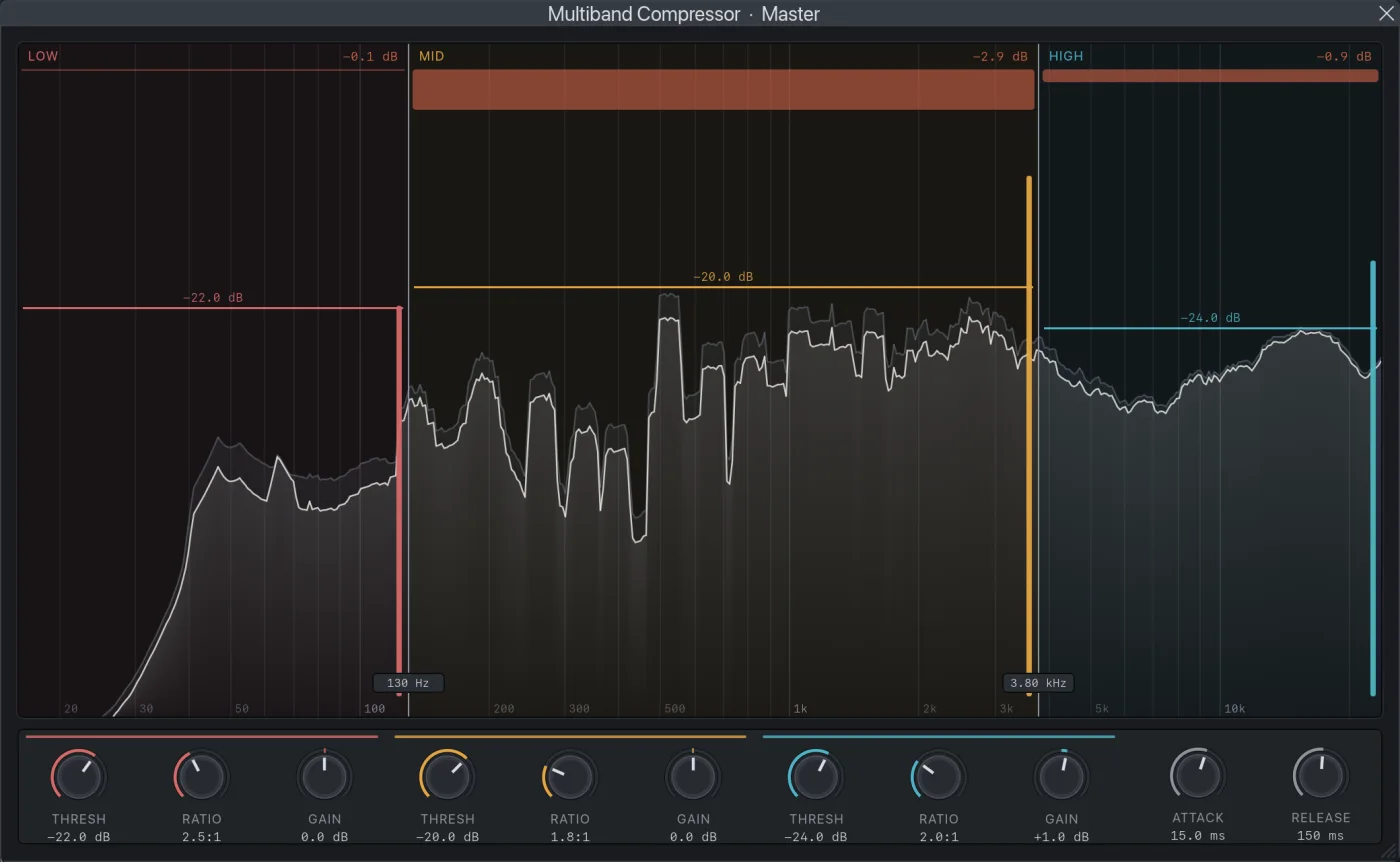
Splits the signal at two crossovers and compresses lows, mids and highs separately. It earns its place on a master that's boomy only when the bass and kick land together, or on a vocal that gets harsh only on loud notes.
- Crossovers
- Low/mid 40 to 500 Hz, mid/high 800 Hz to 10 kHz
- Per band
- Threshold, ratio up to 10:1, output gain
- Timing
- Attack 0.5 to 200 ms, release 20 ms to 1 s
Look-ahead limiter
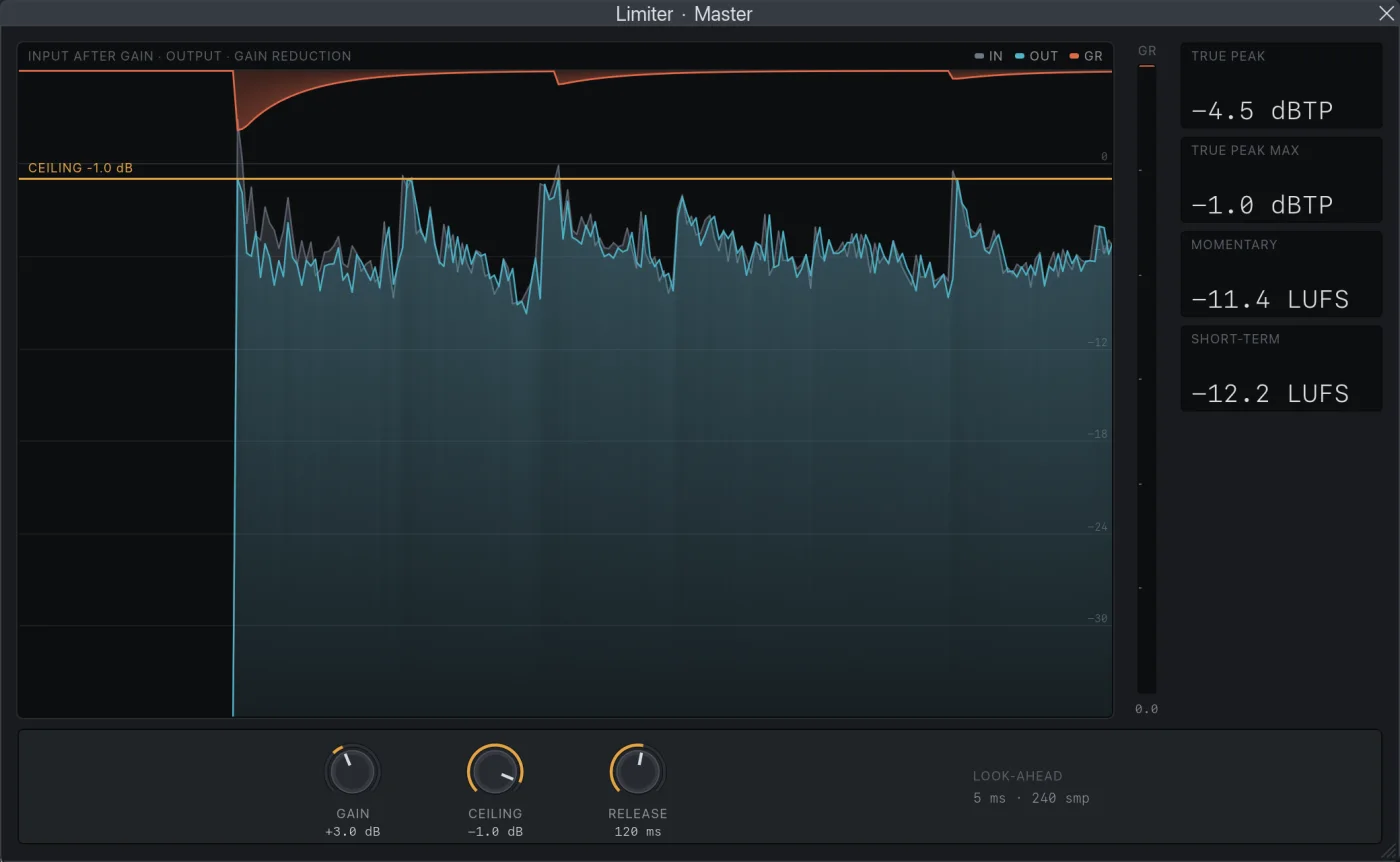
The last thing on the master. It looks 5 ms ahead, so peaks are caught before they arrive, and it holds the output under the ceiling you set. Its panel reads true peak and loudness as it works. Loudness matching drives this limiter for you when you name a LUFS target.
- Gain
- −12 to +24 dB into the limiter
- Ceiling
- −12 to 0 dB
- Release
- 10 ms to 1 s
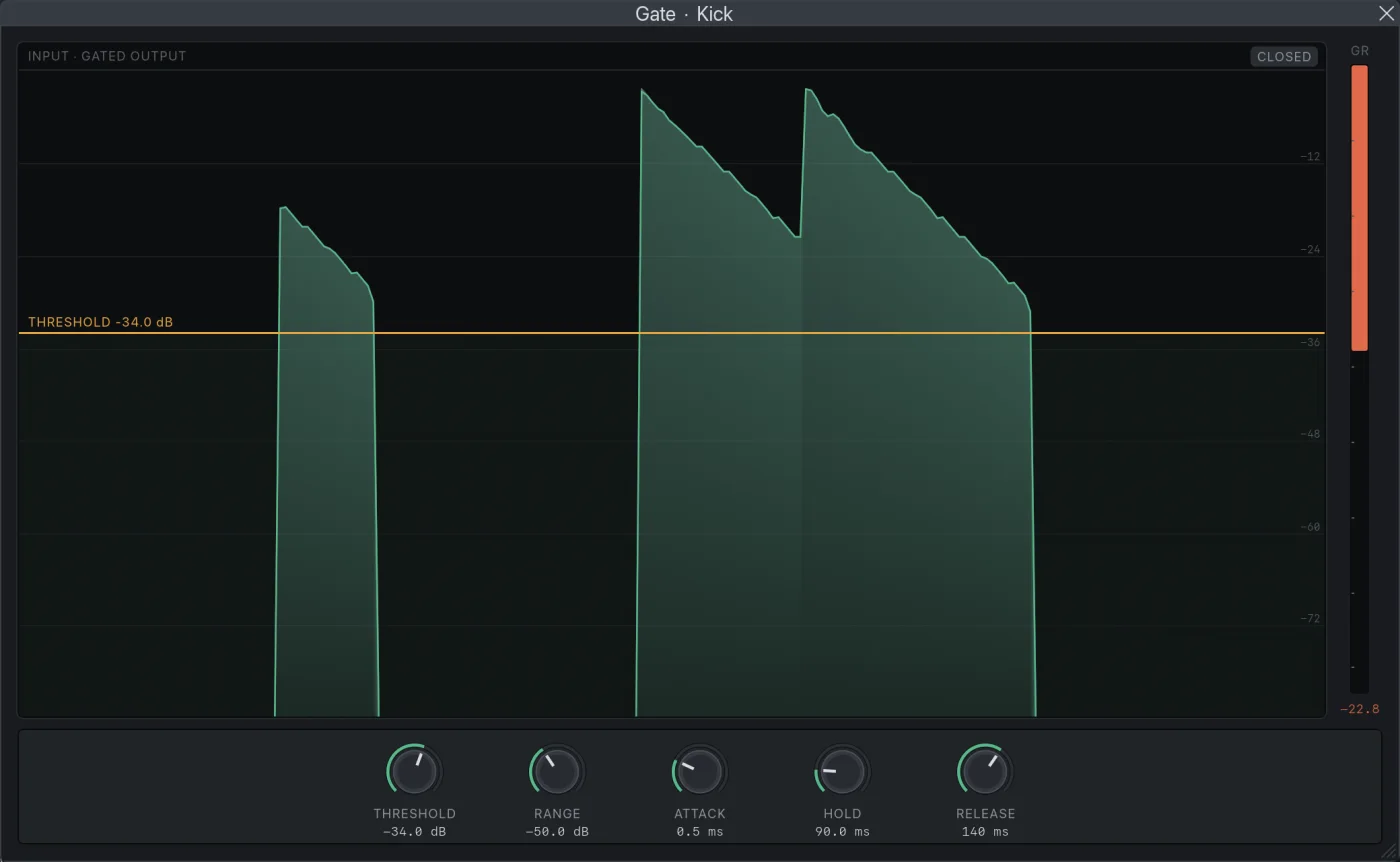
Gate
Keeps the kick mic quiet between kicks and the snare mic quiet between snares. Range sets how far it closes, so you can duck the bleed by 12 dB and keep the kit sounding like one instrument.
- Threshold
- −80 to 0 dB
- Range
- Down to −80 dB when closed
- Attack
- 0.1 to 50 ms
- Hold
- 0 to 500 ms
- Release
- 5 ms to 1 s
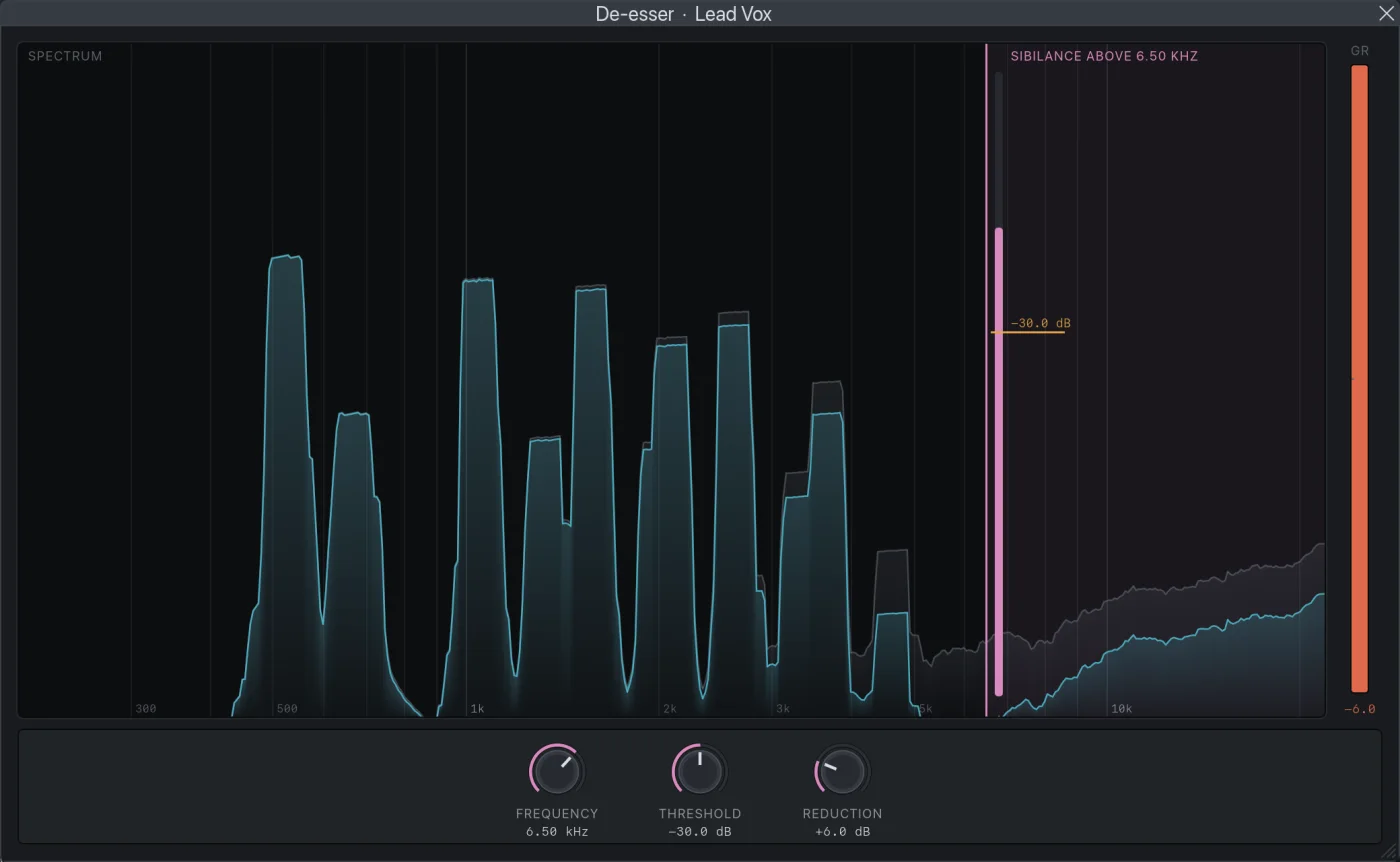
De-esser
Listens above a split frequency and pulls the top down when sibilance crosses the threshold. The rest of the vocal passes through untouched.
- Frequency
- 2 to 12 kHz
- Threshold
- −60 to 0 dB
- Amount
- Up to 24 dB of reduction
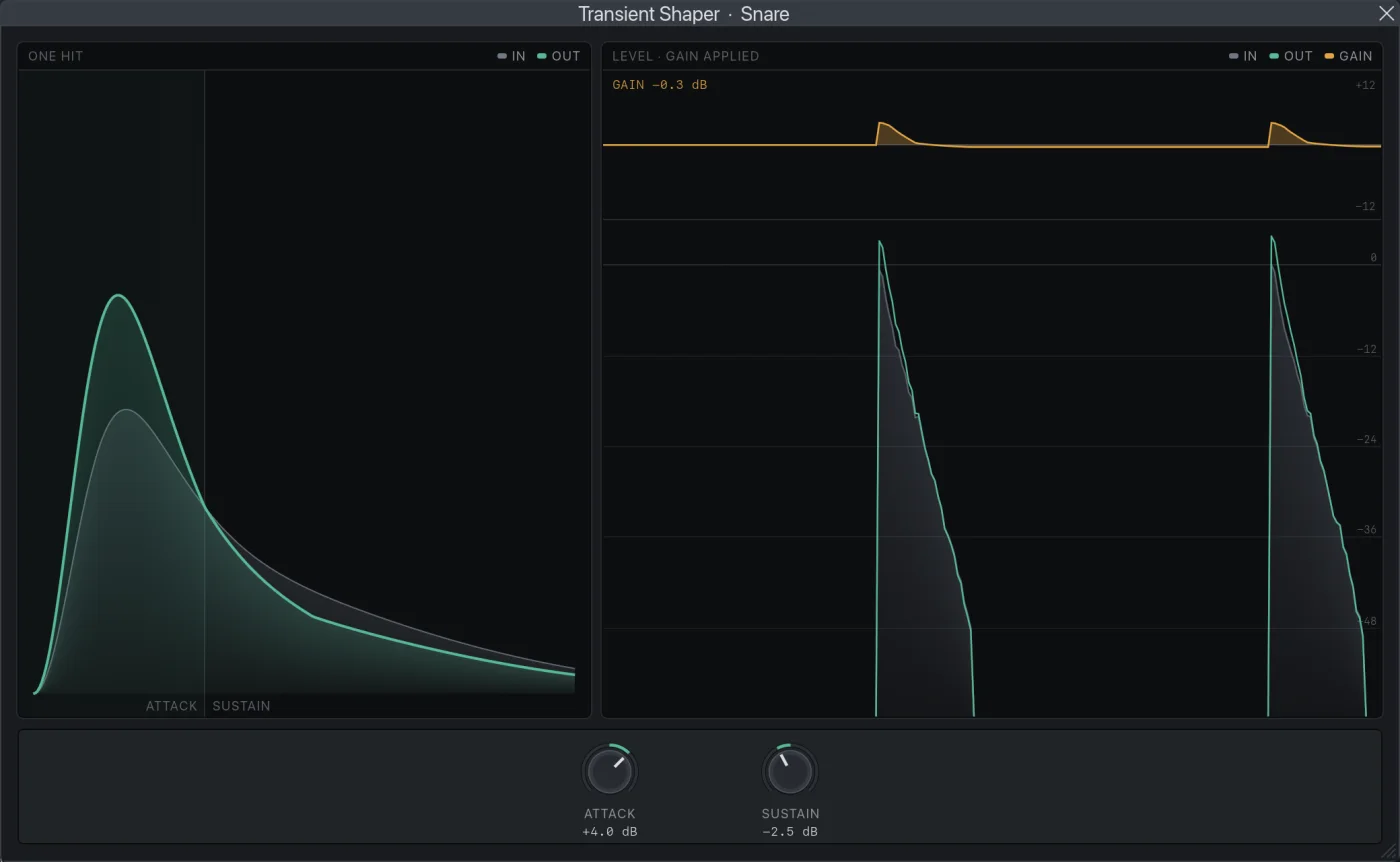
Transient shaper
Two controls that work regardless of level: one for the front of each hit, one for what rings after it. It gets a snare to cut without making it louder, and dries up a roomy tom.
- Attack
- −12 to +12 dB
- Sustain
- −12 to +12 dB
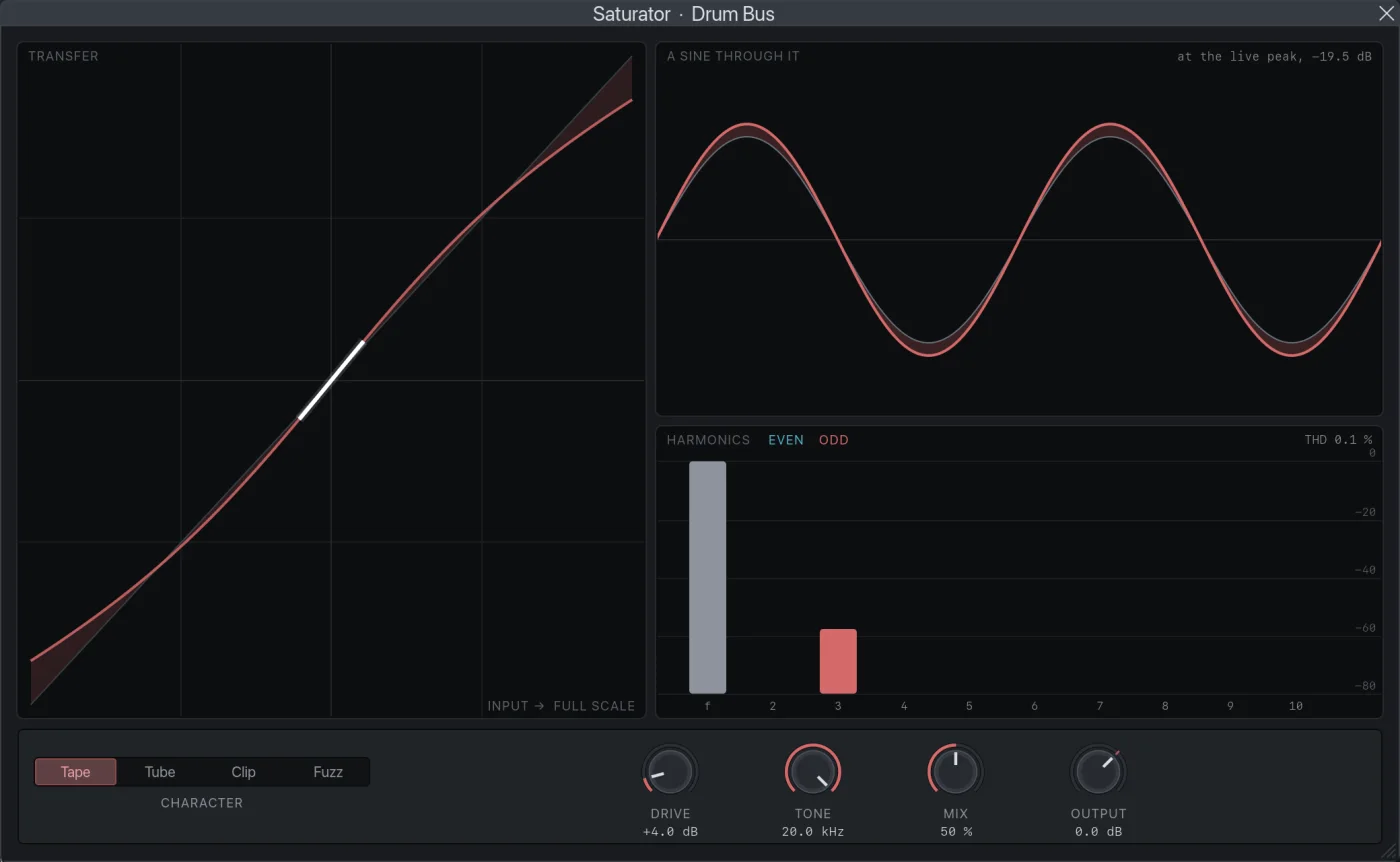
Saturator
Adds harmonics and rounds off peaks. Tape and tube thicken a bass or a vocal quietly. Hard clip and fuzz are there when you want to hear it. A tone control takes the edge off afterwards.
- Mode
- Tape, tube, hard clip, fuzz
- Drive
- 0 to 36 dB
- Tone
- Low-pass, 500 Hz to 20 kHz
- Mix
- Dry to wet
- Output
- −24 to +12 dB
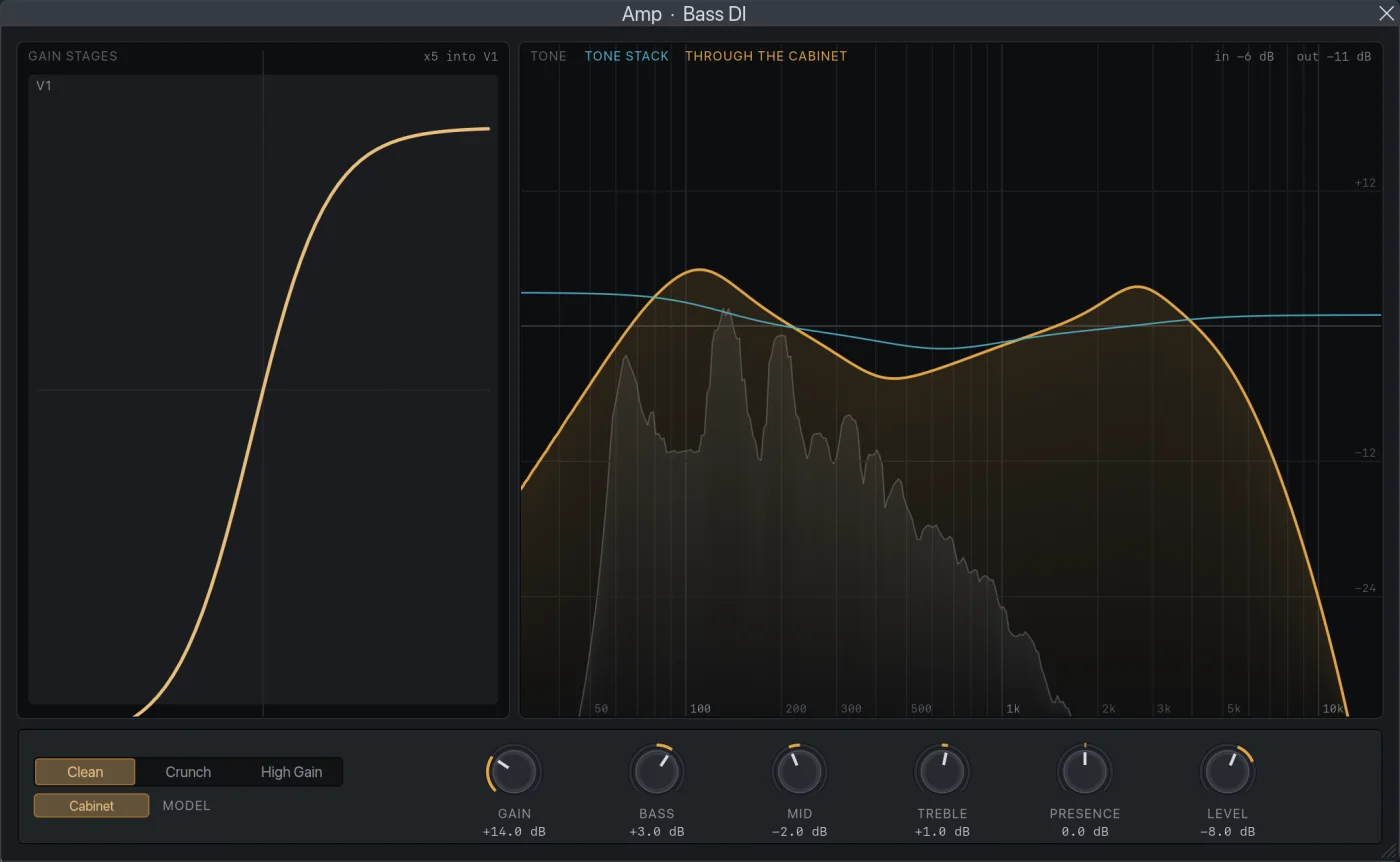
Amp and cabinet
Plug a guitar or bass straight into your interface and record it clean. The amp comes afterwards, so you can change the sound once the song has taken shape. Three amp voices, a four-knob tone stack and a speaker cabinet you can switch out.
- Model
- Clean, crunch, high gain
- Gain
- 0 to 48 dB
- Tone
- Bass, mid, treble, presence, ±12 dB each
- Cabinet
- On or off
- Level
- −36 to +12 dB
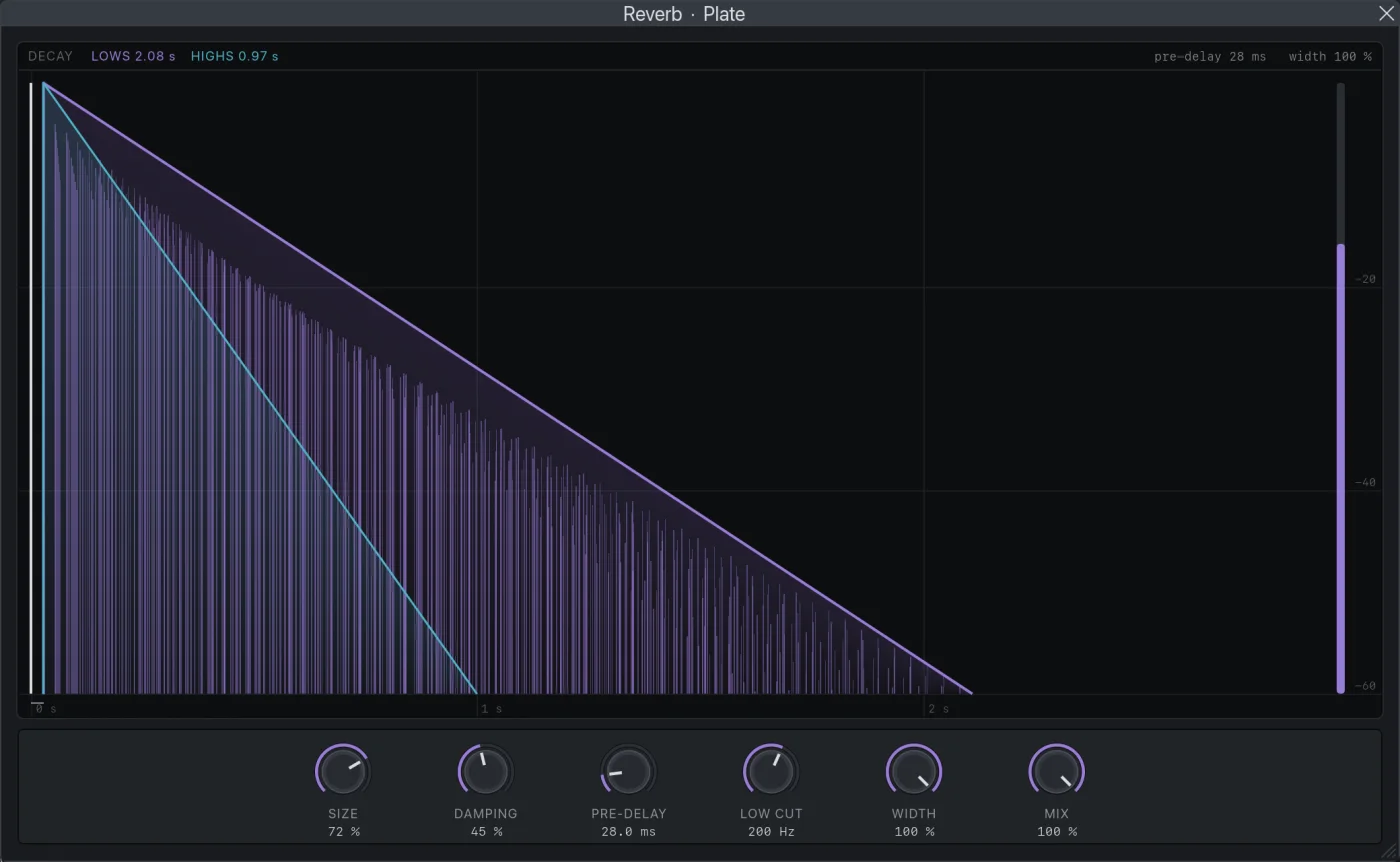
Reverb
One reverb that covers a small room to a long hall. Put it on a bus at full wet and send to it. Pre-delay keeps the vocal in front of its own tail, and the low cut keeps the reverb from muddying the mix.
- Size
- Room size and decay
- Damping
- How fast the highs die
- Pre-delay
- 0 to 200 ms
- Low cut
- 20 Hz to 1 kHz on the wet signal
- Width
- Mono to full stereo
- Mix
- Dry to wet
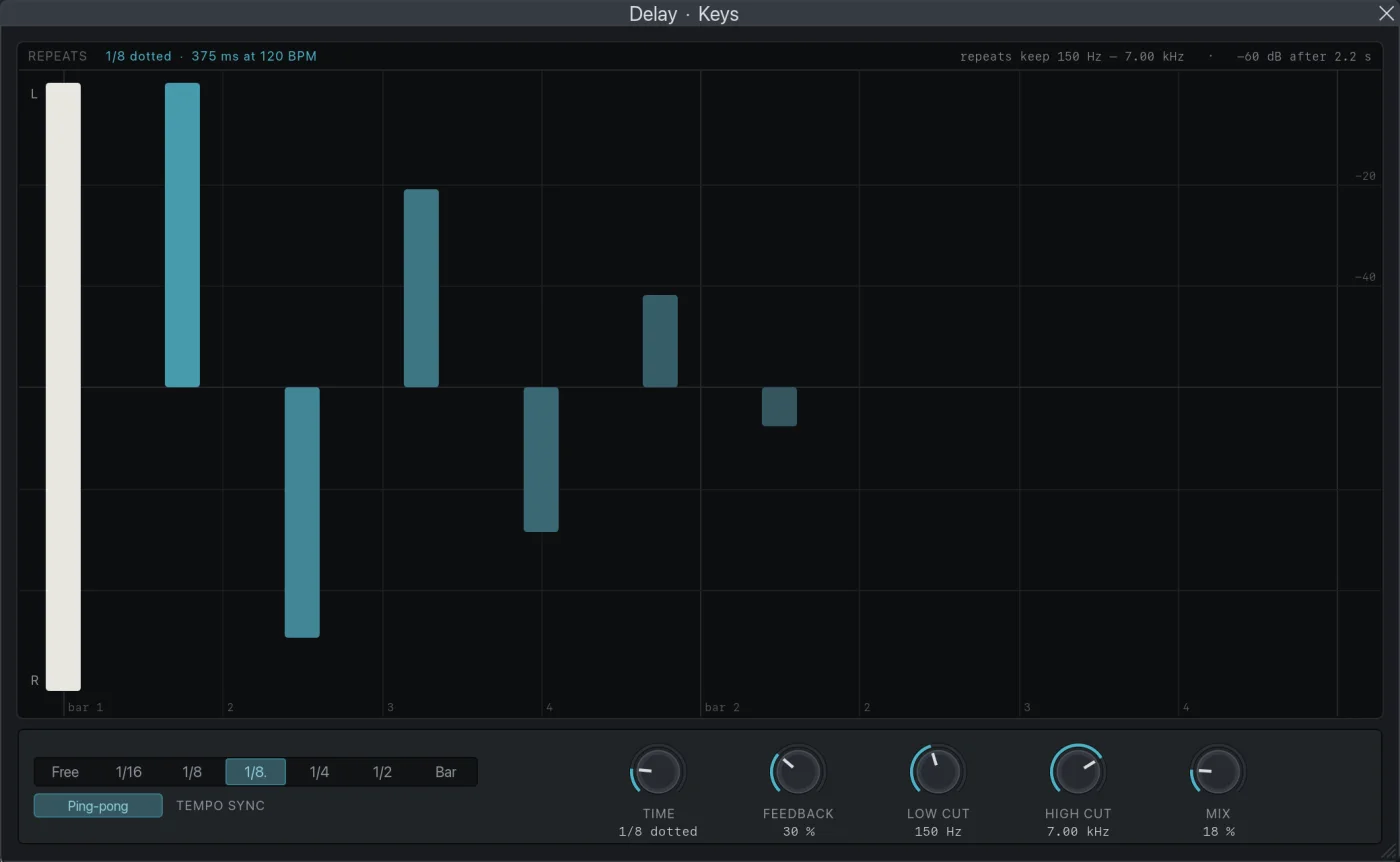
Delay
Set the time in milliseconds or lock it to the song in beats. Filters on the repeats keep them out of the vocal's way, and ping-pong throws them side to side.
- Time
- 1 ms to 2 s, or synced in beats
- Feedback
- Up to 95%
- Ping-pong
- On or off
- Filters
- Low cut and high cut on the repeats
- Mix
- Dry to wet
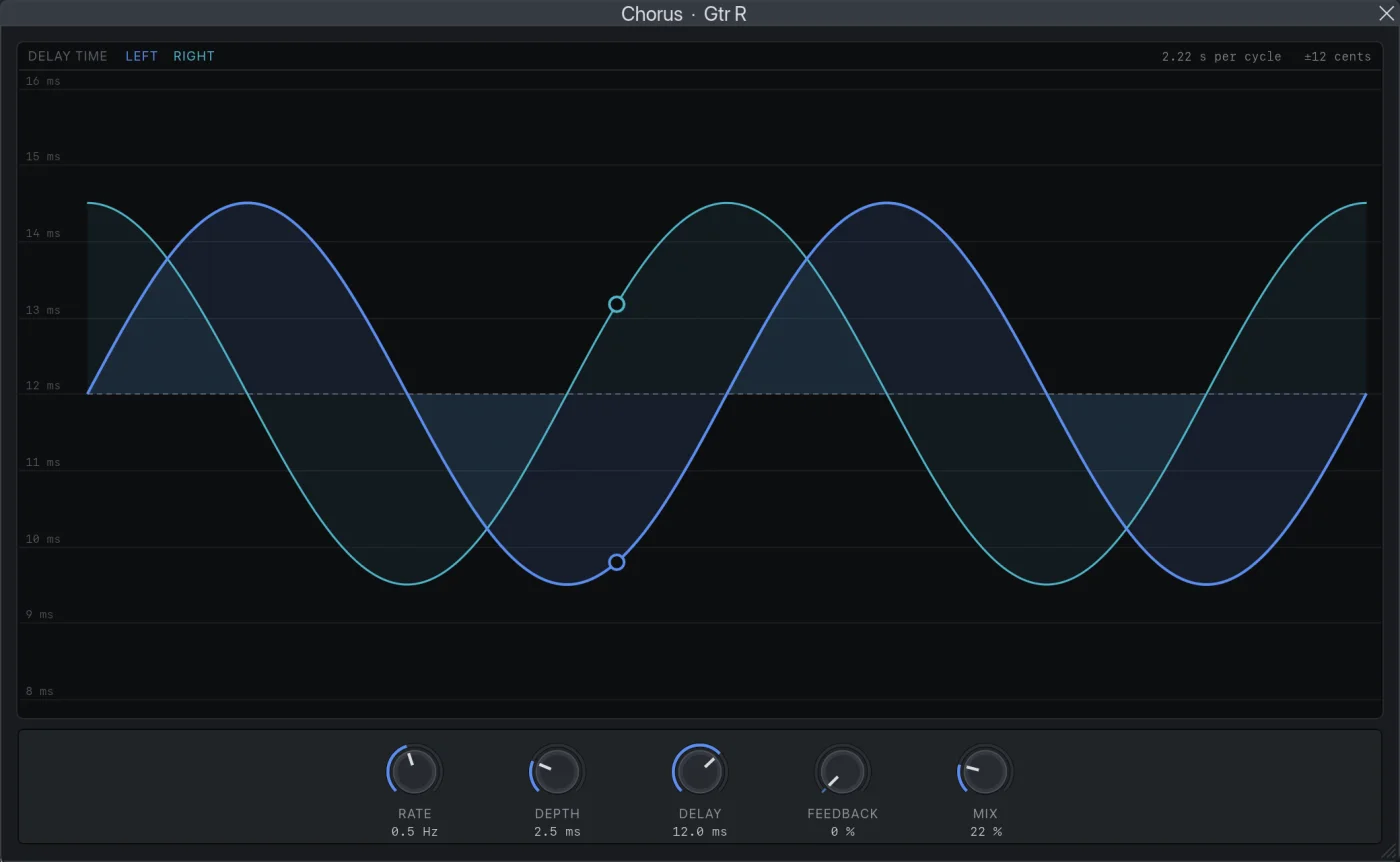
Chorus
A short modulated delay. Slow and shallow gives width, faster and deeper gives the obvious chorus sound.
- Rate
- 0.05 to 8 Hz
- Depth
- 0 to 10 ms
- Delay
- 1 to 40 ms
- Feedback
- Up to 90%
- Mix
- Wet level
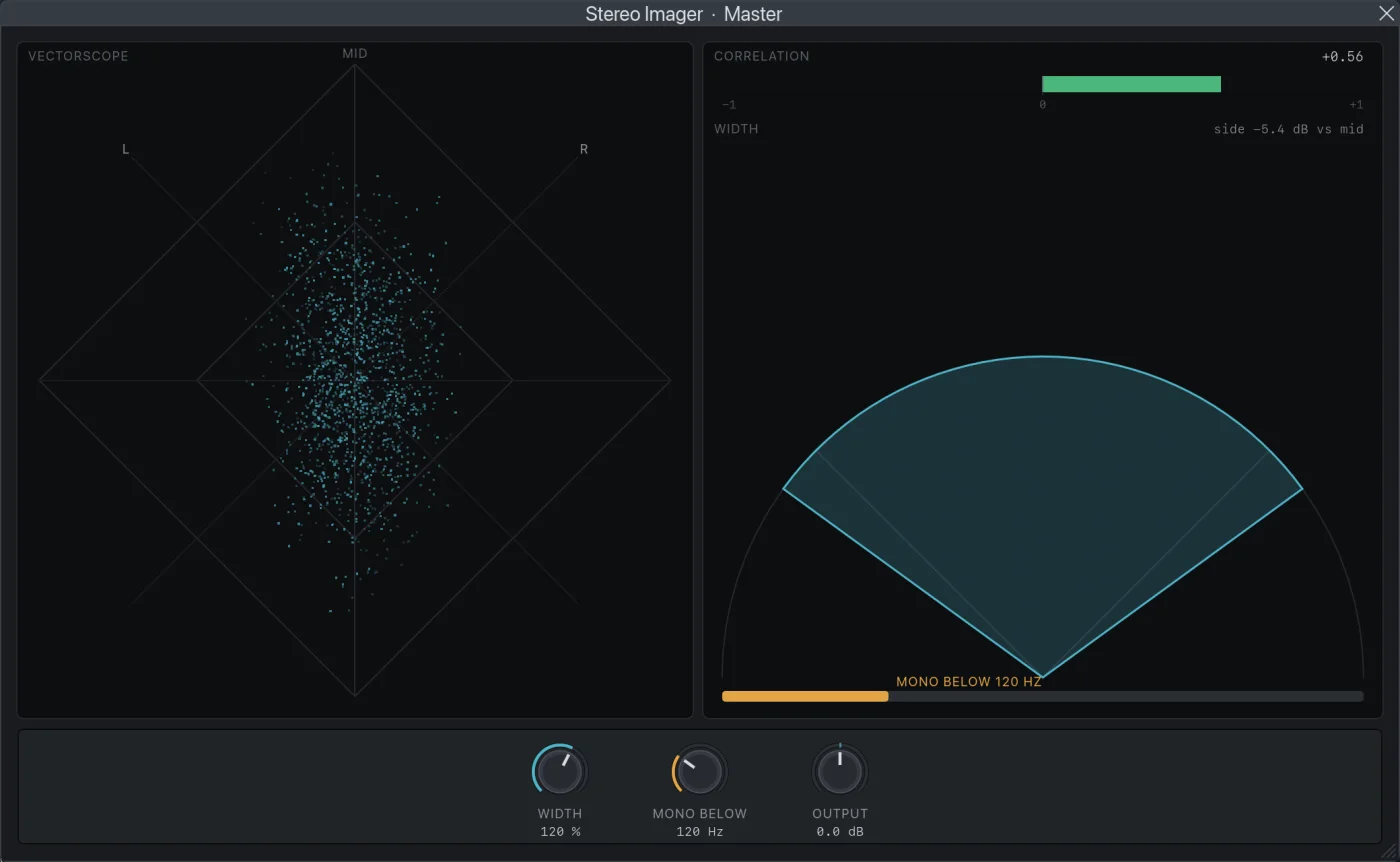
Stereo imager
Widens or narrows the sides, and can fold everything under a frequency you choose to mono so the low end stays solid on any speaker. A vectorscope and correlation meter show what the change did.
- Width
- 0 (mono) to 2× the sides
- Mono below
- Off, or up to 400 Hz
- Output
- ±12 dB
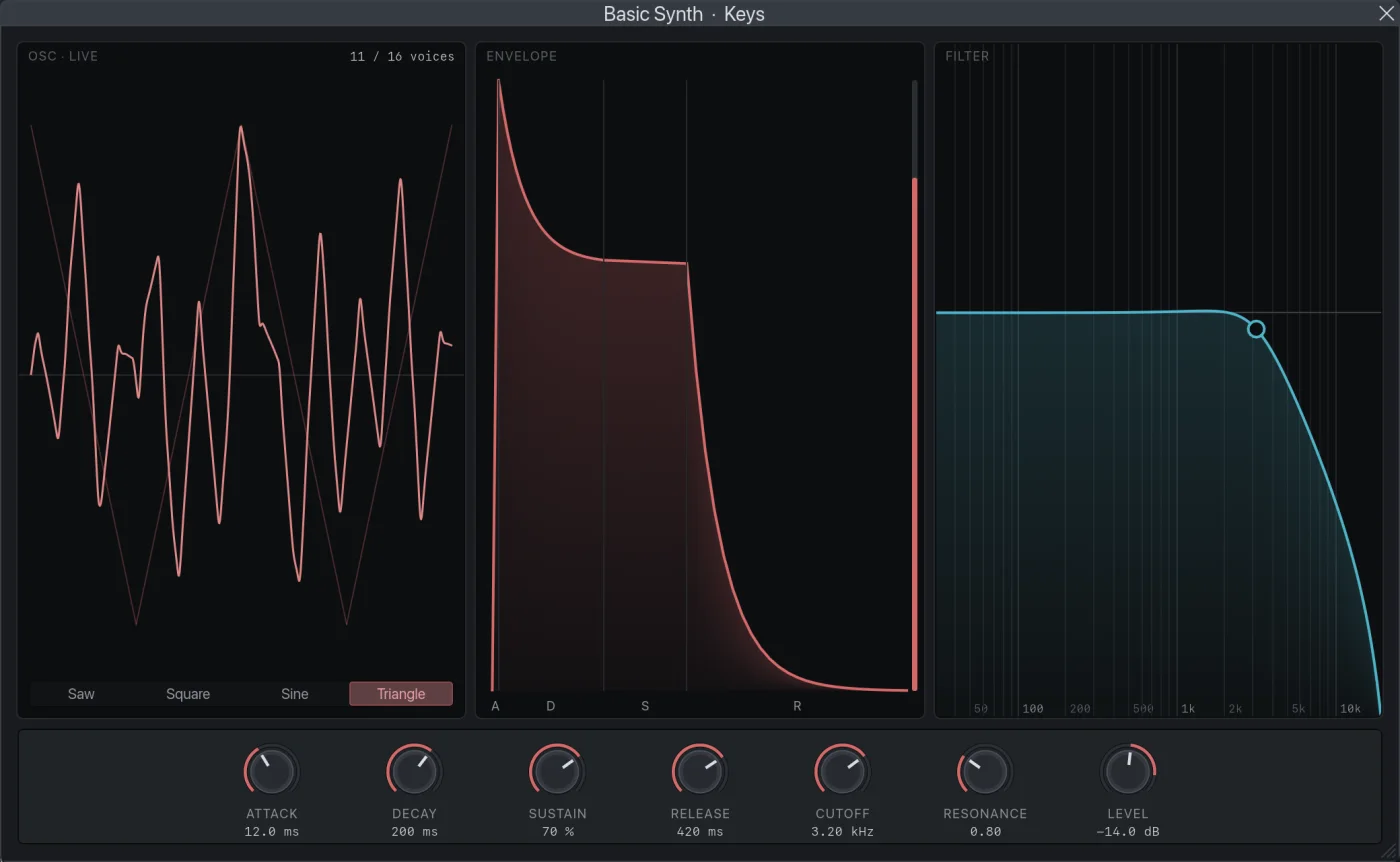
Synth
Four waveforms, an envelope and a filter. It's there so an instrument track makes sound the moment you add it. Swap in any VST3 or Audio Unit instrument when you want something bigger.
- Wave
- Saw, square, sine, triangle
- Envelope
- Attack, decay, sustain, release
- Filter
- Cutoff 60 Hz to 18 kHz, resonance
- Level
- −36 to +6 dB
They're all in the download.Audizer is free for Apple Silicon Macs.
Download for Mac Free · Apple Silicon